


 Apple Podcasts
 Spotify
 iHeartRadio
 Amazon Music
 Decluttering Large Appliances
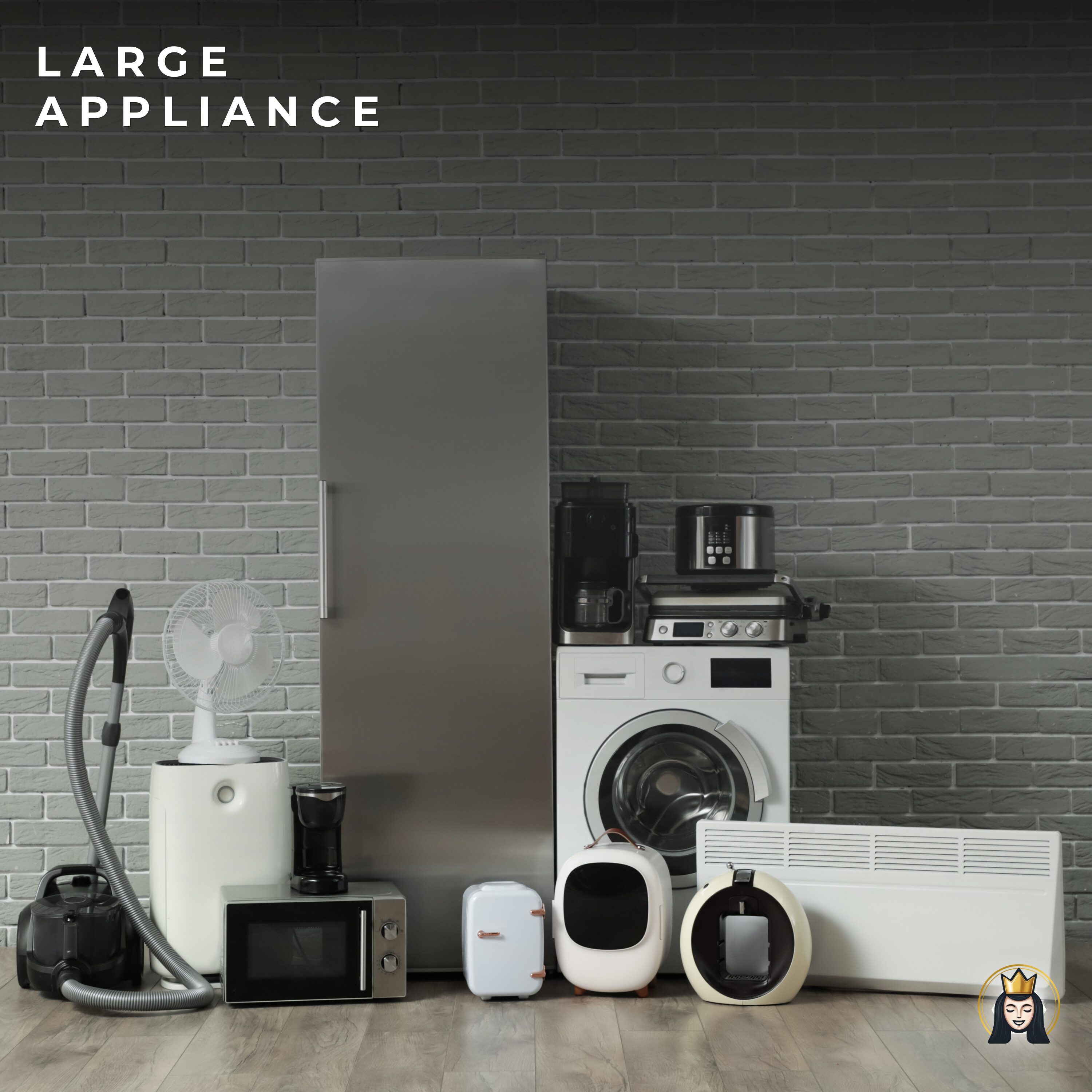
I focus on decluttering the kitchen, especially the big, often overlooked appliances and cold storage. I start by tackling large appliances—stoves, ovens, dishwashers, microwaves (and even washer/dryer if in the kitchen)—and recommend clearing their tops and surrounding areas, cleaning inside them, and evaluating whether duplicate or nonfunctional appliances should go. For the refrigerator, I walk listeners through emptying it completely, doing a deep clean, checking expiration dates, tossing doubtful items, and restocking with grouped zones (dairy, produce, fruits, veggies). I suggest creating a “use me first” area for leftovers and near-expiry items and turning aging produce into smoothies or soup instead of wasting it.
For the freezer, I advise pulling everything out, discarding freezer-burned or unidentifiable items (or using older items in a freezer-night meal), labeling and dating what you keep, and organizing by categories with bins or bags. I also recommend keeping a quick inventory (phone note or sticky) to avoid buying duplicates and scheduling a monthly “freezer night” to use older items.
To maintain simplicity, I recommend weekly quick wipes of fridge/freezer, avoiding overstuffing (don’t block vents), following a one-in-one-out rule for gadgets and tools, and doing a 10-minute appliance zone reset monthly to keep filters, rinse aids, and cleanliness up to date. I close by addressing sentimental items—handle them last, keep the best, photograph items if needed, digitize or create a memory box, and rehome items others might enjoy. Finally, I offer prevention strategies: one-in-one-out, a five-minute nightly straighten-and-tidy, keeping flat surfaces clear, creating designated homes for important things, and waiting a few days before nonessential purchases so you buy intentionally.
Do you need a more personalized decluttering touch? Avery offers a one on one consultation where you can go over your specific decluttering needs and start the road to a happier clutter free life. Contact the declutter Queen at avery@averycundill.com
Want FREE Declutter Hacks? Sign up here.
Mary Anne Ivison 0:01
The Declutter Queen with Avery Cundill.
Avery Cundill 0:06
Welcome back to The Declutter Queen. We are back in the kitchen today. We're going to tackle a part of the kitchen that often gets overlooked, those big, heavy, often forgotten items. Yep, I'm talking about large appliances, the fridge, and the freezer. Why, you may ask, am I moving to the fridge? Is that a place that gets cluttered? Absolutely, especially when your fridge is stuffed to the brim with expired dressings and mystery leftovers. Also, you can declutter large appliances, even if they're built in. Let's get into it.
Matt Cundill 0:57
Section one: large appliances.
Avery Cundill 1:01
So, let's start with the big guys, your stove, oven, dishwasher, maybe even microwave, possibly washer, dryer, if they're located in your kitchen. You may not be removing these appliances, getting rid of them, so to speak, but you can absolutely declutter around them and inside them. So, first I want to suggest that you clear what's on top and around them. Okay? What am I talking about? So that pile of mail on the microwave, get rid of it. Are your blender and toaster permanently cramped on the stove? Find them a better home. You want to make sure that the larger appliances are completely free of clutter on their surfaces, and also possibly make space near them, you Now we can move to checking. Inside, is your oven full of baking trays? No judgment. However, time to evaluate. Is there a better place to put these rather than inside your oven? Is your microwave turntable grimy clean it also look what's behind the microwave stuff kind of gets dropped in there, so check that too. In fact, I might add, this is a good opportunity to give all of your large appliances a thorough deep cleaning. Don't be afraid to also ask yourself questions, such as, do I need a new oven? Is everything working well on these large appliances that I'm talking about. Remember, they don't last forever, so sometimes it's worth it to get new ones. Think also about your dishwasher. Has your dishwasher been telling you to add rinse aid or to clean the filter for weeks now? Now is the time to do it. Decluttering is also about maintaining and keeping what you have functioning, so take the time to do these scans and make sure that everything is up to date. One of the things to look at, too, is you may have an air fryer. They have been all the rage over the last few years, and everyone I know has run out to get one. But what I will say is this: your oven may have an air frying function. So, do you need both? There can be large, and they can take up space. So, if you've got appliances that do the same thing, you can get rid of one.
Matt Cundill 3:50
Decluttering the refrigerator.
Avery Cundill 3:52
Now, let's crack open the fridge. This is one of those spaces that fills up fast, and we rarely stop to question what's in there, so the first thing I want you to do, empty your fridge completely. Yes, really, use a cooler or box if you're worried about things warming up, but I do this often, and truthfully, nothing stays out for too long. Time to do a thorough fridge clean. It's not every day that your fridge is empty. Take advantage, clean out everything in your fridge now. Check expiration dates, so toss anything expired or questionable. Say goodbye to that three month old mustard crust and the half used jar of pickles from two years ago. This is a great time to get rid of stuff that is not good anymore. When you're ready to restock, I like to group like things alike, so as much as you can put your con. Diamoniques together have your dairy in one zone, produce where it belongs, fruits on one side, vegetables on another. Oh yeah, and by the way, now's the time to check your fruits and vegetables. Anything looks wilted, I have a suggestion coming up. Stand by now. When we restock, also toss anything you didn't know was in there. If you didn't know it was there, you're probably not using it. Another cool idea is to create a use me first area. Now, you can have this in any part of your fridge, could be for leftovers or ingredients that are almost at their limit, put these things front and center, so you'll use them quickly. I want to circle back to when I was talking about aging vegetables. What a great opportunity to make a soup, and also, if you have fruit that's kind of turning, but you don't want to get rid of it. I like to put old fruit in freezer bags, and then use them for smoothies, no waste, no fuss. And if you think about how expensive grocery bills are today, wasting is a no-can do.
Matt Cundill 6:22
Declutter. decluttering the freezer,
Avery Cundill 6:24
also known as the place where good intentions go to die. So, I know I just told you to put fruit in freezer bags, however, they can't last forever. So, if you have nine frozen bananas that you were gonna turn into banana bread two years ago. Those have to be thrown out. Maybe you want to make the banana bread now. Your family will thank you, but if you're just not into it, throw out those bananas. That last little bit of dinner that you were for sure going to eat for lunch two months ago, get rid of it. Other things that are unrecognizable, covered with freezer burn, get rid of that too. So, pull everything out of your freezer. This is important. Again, great opportunity to clean it out. Whatever you decide to keep, I would suggest to label and date it, so here's where you check if it has freezer burn, smells weird, or is unidentifiable. Let it go, but what's staying? Label it, so you know the date and what it is when you're going ruffling or shuffling in there for finding things into your freezer. The next step is to categorize or organize what's left, so frozen veggies, put them in one area, meats in another. If you've got some pre-boxed or pre-tupperwared meals, put them in another section. Snacks, use bins, baskets, ziploc bags. These are great to help you keep organized. So, another thing to do is to create a quick inventory. You could put this in your notes in your phone, or make a little sticky note and put it somewhere else. But take a list of the things that are in your freezer. You don't have to open it and close it all the time. So, if you're needing to know if I have three bags of frozen peas, you've got a little note, and then you won't go and get them again when you're at the store. Plan a freezer week, and this is really fun. Once a month, I call this freezer night to use up older items, and it's a built-in decluttering system and a grocery budget win. So, on this freezer night dinner, now's the time. Dive in, see what you can make. Remember that show, Chopped, from years ago. See what you can make from a bag of frozen peas, a chicken breast, and whatever else is in there. You'd be surprised at how fun it can be, and also no waste
Matt Cundill 9:08
maintaining simplicity,
Avery Cundill 9:09
so I'm going to give you a few tips on how you can maintain the simplicity. You've done the hard work, now keep it up with a few simple habits. You may want to wipe down your fridge and freezer every week at this time. You can also scan, see what you need, see what you have. You may also want to remind yourself not to have an overstuffed freezer, and it may help to know that you don't want to block the vent in your freezer, because over stuffing it reduces its efficiency, so keep your freezer relatively manageable for kitchen gadgets. Remember that one in one out rule, so if you have a non-functioning can opener and you want to get rid of it, you can get a new one, but the old one has to go. Also, you may want to schedule. Duel a 10 minute appliance zone reset once a month, and this will help you to go through your appliances, make sure they're clean, make sure that the filters have been replaced, or the rinse aid has been added, or you've cleaned your oven. This will help reduce stress down the way. Remember, decluttering isn't about having less just for the sake of it. It's about making space for what matters. So, whether it's a clearer fridge, a smoother cooking flow, or just less mental clutter every time you open a cabinet, you deserve a kitchen that works for you, not against you. And if this episode helped you, I'd love it if you left a review or shared it with a friend who's been threatening to clean out their fridge since last summer. Until next time, keep your counters clear, your fridge fresh, and your life a little lighter,
Matt Cundill 11:03
and now the Queen responds to your silly little questions. What should I do with sentimental items?
Avery Cundill 11:10
So, circling back, handle sentimental items last, and I say this because at the end, or nearer to the end, your decision-making muscles are stronger. So, what's the approach? Ask what the memory is, not whether you like the item. Keep the best of the best, not everything. So, when we go through our children's projects from when they were younger, you might have 1020, 30 little finger paints. It's okay to get rid of the majority and keep the best. Take a photo of the items if they're really sentimental and you feel there's going to be a loss. Get rid of the item, but keep the picture, and you can manage that later. Maybe that goes in a scrapbook or something else. The item can go re-home items to people who might enjoy them more. And one of the things with decluttering that I feel is a bonus is to know that your clutter can be something that somebody else can really, really use and benefit from, so maybe it's a family member, maybe it's a donation place, something else, but get rid of stuff that you're not using, rehome them, and finally you may want to create a memory box, or even digitize letters, photos, artwork, your kids' schoolwork, so that that box holds the really crucial key items that you want to keep. Think in terms of honoring memories, but not storing clutter. I hope that makes sense.
Matt Cundill 12:59
How do I know if I should keep something or let it go.
Avery Cundill 13:02
Ah, the old prevention game. Well, maintaining has to become a habit, so everything will go back. You know what I mean. Things come in and the clutter will start again, so you have to give yourself permission, almost as if it's a job to maintain, so I'm going to give you some prevention. What I mean, prevention, preventing the clutter from coming back. Prevention strategies. First, follow the one in, one out rule. So I buy such and such. Let's say you buy a pair of gloves, one pair of gloves has to go, you get the gist. Another thing that really helps is to do a five minute nightly reset, so just before you go to bed, do a little bit of straightening, I call it an S and T, a straighten and tidy, keep flat surfaces in your house clear. I'm often complimented. I take it as a compliment, but when friends come over, they say you don't have any clutter, you don't have anything on the surfaces by design. Clutter loves horizontal space, so keep that in mind, all horizontal spaces as clutter-free as possible. Give yourself permission to have designated spots in your home for important items, so we all have stuff. Where are we going to keep this stuff? Once we create designated spots, I guarantee you, you will lose less things, and you will have less clutter. And finally, shop intentionally, and this is a tough one for many of us, myself included. Wait a couple of days before buying non-essential items, so we get it in our mind we need something, and we impulse. Possibly go and buy it. Wait, think it over. Keep something in your cart two days. Clutter builds from unmade decisions. Okay, and I'll repeat that. It's important. Clutter builds from unmade decisions. So make your decisions intentionally on purpose and with purpose, and micro decisions happen daily. Think about them before you can.
Mary Anne Ivison 15:33
Thanks for listening to The Declutter Queen with Avery Cundill. For more decluttering tips and tricks, go to the Declutter queen.ca produced and distributed by The Sound Off Media Company,
