


 Apple Podcasts
 Spotify
 iHeartRadio
 Amazon Music
 Scarf Mountain
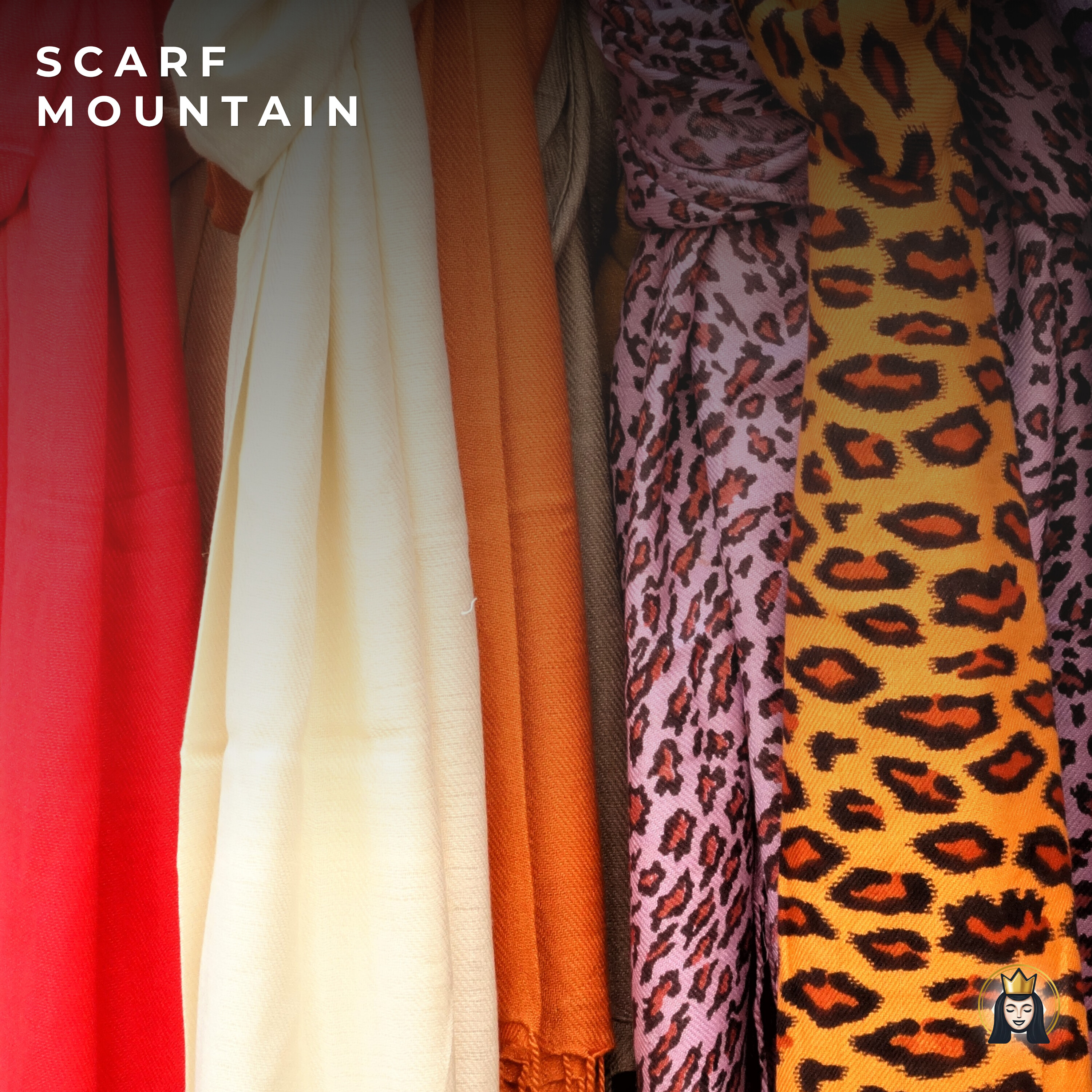
I’m recording from Spain and taking on a familiar beast I call “scarf mountain”—the piles of hats, scarves, gloves, and mitts that quietly overrun our homes. I explain why winter accessories multiply so fast: they’re affordable, often gifted, easily lost and replaced, and tied to memories and sentiment. Then I walk you through a clear process: gather every winter accessory from all corners of your home, pair and sort them, ruthlessly weed out anything worn out, itchy, ill-fitting, or never used, and keep only what you truly wear and love. I share practical storage ideas, like clear bins, labeled baskets, and grab-and-go stations near the door so winter mornings run smoothly.
In the second half, I help my mom, Michelle, declutter decades of photo albums using simple photo boxes, showing how the same principles can make even sentimental projects manageable and meaningful.
Unknown Speaker 0:01
The declutter queen with Avery Cundill,
Avery Cundill 0:07
today I'm recording in Spain, where I am currently on a vacation, working and pleasure. And it's kind of neat to be talking about this specific topic today, because it's not very relevant where I am right now, as the weather is quite nice, but we're going to be covering winter accessories. And I call this episode scarf mountain. But scarf is basically synonymous with all of our winter accessories. Insert gloves, insert hats. You guessed it, as we dive in, it's good to remember that these categories are often overflowing shelves with hats that are overflowing mitts all over the place, scarves, too many what to do with them, so winter accessories can quickly get out of hand. And of course, if you live in a hot climate, you may still have winter accessories, fashion scarves and other beanies that you might wear in the winter months. So this applies to you, too. But let's talk about why winter accessories multiply like rabbits, and how to declutter them effectively, how to store the ones you do keep in a way that makes sense. And then, of course, how to get rid of stuff that you're no longer using. So why do we accumulate so many winter accessories? One of the reasons might be because they seem harmless. They're small, cozy. They're often gifted to us because who doesn't need a new, fresh scarf or hat? A scarf here, a hat, there, gloves. No big deal, right? But they pile up fast. And one of these reasons that we have so many is, number one, they're affordable, so we buy them often. Number two, they're gifted to us, especially during holidays, birthdays and other occasions. Number three, we often lose them, and then might replace them, and then, oh, I found the original. Now I've got two or five or seven. Another thing is they feel sentimental. So these items are often caught up with memories for us, especially hats. Maybe we bought a hat on vacation or a sporting event, and so we keep them, even if we don't wear them before you know it, you've got a full drawer of mismatched gloves and scarves and hats that you haven't touched in years. So we got to fix that.
Step one, gather everything, coat closets, entryway baskets, bedroom drawers, car back seats, get every winter accessory in one place again. The power of seeing things piled up in a group can be shocking and can be sobering.
Step two, pair up and sort so let's start with gloves and mitts. Match them into pairs, and I guarantee you you're going to have a bunch of solos. Now sometimes when I talk about this with friends and family, and I mentioned gathering gloves, they think, Oh no, but I'm gonna find the other one. You're probably not. So if you have missing gloves, put them aside for now, if you're not convinced that, oh, wait a sec, I think I saw it here, there, everywhere, you can put them aside however, be prepared to face the realization that you're not going to find their mates, and those ones are just going to be hopefully they weren't super expensive, but those are going to be the ones that you have to toss Then move to scarves, hats, ear warmers, neck warmers, sometimes balaclavas and kids gear, if you have little ones, sort by category, that can help decisions be easier. And so once you have all these piles, go through them and do a forensic and say, am I wearing this? Are there holes in them? Are they losing threads? You might be able to get rid of a lot just because they're no longer in good shape. And then you can ask the questions we'll get to that I recently decluttered these accessories in my own house, and a lot of my podcasts are based on my own real life experiences. So I have. To tell you that when I did this declutter, I found not one, not two, but eight sets of those. You know, those little clips, Mitt clips, I think they're called, where we clip our kids mitts onto their jackets or snowsuits in the hope that they're not going to lose their mitts today. Well, the kids I have in question are 2024 and 26 why do I still have these clips is a problem, so I need to go through my stuff more, and also somebody else is going to benefit for those, those went into my donation bag, and I hope somebody else is using them, although I still found my kids lost their mitts, but at least it's a temporary measure.
Speaker 1 5:47
Step three, the keep or let go questions.
Avery Cundill 5:51
So circling back to what I kind of drifted off earlier, now we ask the questions, so we have the piles of hats and mitts and scarves. Now we ask these questions. Of course, we've already gotten rid of stuff that has holes or threadbare or not in good shape. Now the questions do I actually wear this, and I guarantee you have some stuff that you're not wearing. Another question to ask is, Does it fit and feel good try on those hats? Sometimes, when we actually put the hat on and we feel like, howdy, doody, we shouldn't keep that hat anymore. And you might start to ask the questions, maybe somebody else I know would like it, or maybe I can donate it the good condition one we kind of covered. If it's not in good condition, should be in the donate pile or even garbage, depending on how bad condition it is. And the other thing to ask is the duplicates and this one can kind of be, kind of be a little sticky for us. So do you have five heavy duty scarves for really cold weather? Do you need five? I bet you're only wearing one or two of those five. And if we're truthful and ask these questions, we can easily start to declutter and get rid of some of these scarves. Keep only what you use and love, one warm pair of gloves that fits well is worth more than five pairs that don't be ruthless. Do you have some itchy scarves that just drive you crazy, but you're just scared to get rid of them. Get rid of those itchy scarves, stretched out hats or anything you keep just in case, but you never reach for them. And those solo gloves that we found earlier, if the mate hasn't turned up by now, it's probably not coming back. Luckily, usually mitts don't break the bank, and I advise you never to buy a pair that does, because you'll feel sad when you leave one in the coffee shop or somewhere else.
Speaker 1 8:09
Step four, donate or recycle thoughtfully.
Avery Cundill 8:13
So this is a big step and important and very, very I'll use the word cathartic. It's not even extreme. Donate your clean, gently worn winter gear to shelters or organizations that provide for people in cold climates. Recycle worn out items at fabric drop off points, if that's something that's available to you, and keep a small stash of extras only if you host guests or live in a very snowy area, but I would set a limit on that. We always think we're having guests every day. 10 guests dropping in randomly. That's rare to happen, so maybe one, maybe two extra little pair of mitts.
Now we've decluttered, and I hope you have, depending on how much winter accessories you owned, I hope you have quite a few bags for giveaway and possibly garbage. Once you've decluttered, it's time to store your winter gear in a way that's easy to access and easy to maintain. So the truth of the matter is, we don't use these items year round, very rarely, and we're gonna maybe want to store them. So when you store your winter gear at end of Season, stuff that you're keeping here's a few tips. Use clear bins or labeled fabric baskets by category, hats, scarves, gloves, then when you need to grab them next season, they're ready to go. Use over the door shoe organizers for grab and go out. Access and just depending on your space. This is just another idea of how you can store these accessories. Another idea is to dedicate a small bin near your front door for currently in use items. And again, this can depend if you have a really great mud room and shelves, you can put this stuff there, but have stuff that you're using in a specific area so that you can get it easily and use it. The out of season gear can be in bins that are safely stored away clutter free. So again, sometimes we think, depending on your space, you may be able to keep your stuff in one area year round, but sometimes just space restrictions, especially if you live in a one bedroom apartment, not going to be able to keep everything out. So have a plan. You can have these clear bins, fill them with winter gear, put them away, and when you want to bring them out again next year, maybe you fill them with straw beach bags that you're not going to be using seasonal shifts. And here's something to remember, you're not being wasteful by letting go. You're being thoughtful. Every unused item in your drawer is something that someone else might need, and I don't know if this will help you in your journey, but it really does help me, because items are just items, the material useful to somebody else. We don't need as much as we think we do, and that could be maybe the cornerstone of decluttering. Keep what you need and wear, there'll be a feeling of relaxation that comes over you by just actually having what you need and not a tremendous amount more. Remember, decluttering is a form of generosity, not guilt. Winter accessories don't need to weigh you or your space down. So as usual, I love to give you a little mini challenge. We've talked about a lot of different things, and this might be a project that you're not willing to do in one chunk. So why don't you try a mini challenge? Pick 10 winter accessories to let go of this week. Now I'm not suggesting you get divorced over this, so check with your spouse before you throw away his favorite Buffalo Bills hat. But 10 items, just 10 old hats, solo gloves, scarves you haven't worn in three years, anything that no longer serves you. Then set up a system that makes it easy to grab and go. When winter rolls in, you will be amazed at how much smoother your mornings feel when you're not digging through scarf mountain just to find one glove as usual. If this episode helped you, share it with a friend, maybe even swap accessories again, a great way to get new stuff without adding to your collection.
Unknown Speaker 13:21
And now with the declutter queen,
Avery Cundill 13:26
it is my honor to introduce my next guest, none other than my mother. Michelle Silverberg, thank you for coming on the show, Mom.
Michelle Silverberg 13:37
Oh, my pleasure, dear. I get to see you, and we get to have a little
Avery Cundill 13:41
chat, you know, we, I know we spoke earlier about, you know, a question that you might have about decluttering.
Michelle Silverberg 13:47
Well, I have a lot of photo albums I've collected over the years with my kids, my grandkids, our trips. Some are in albums. Some aren't. And I just would like to know how to store them so they take less space, and the albums are on shelves, on bookshelves. And since you're the declutter queen, a lot of them are your photos, my dear. But let's see what we can do to get a better a better system
Avery Cundill 14:21
going okay? And it's interesting, because this is a problem for many people. I'm finding that I get a lot of questions about photos. So the technique I'm going to give you is one that can work with different things as well. But we'll come back to that. Okay, the first thing I'm going to suggest is that you make a little investment, and the investment is that you're going to end and these can be available many places. I've seen them in dollar stores, Amazon, for sure, has them photo boxes, and I'll send you a link later. And what. These photo boxes are they're actually quite nice. They have different colors and different patterns on them, and they're basically amazing places to store our photos. Now you mentioned that you have photos and albums and other various places, and I think that those storage facilities, they've had their run. Photo boxes give us the flexibility to just put the photos in the boxes, not organize them, not open up that little cellophane and put them in and they sometimes get stuck, and it's it's not a great way to house photos, actually. So the photo boxes will give you a place to put the photos, and then everything will have its place. Now how many photo boxes you get? Well, I'd like to suggest you start with six. You might need to buy more. Start with an investment of six photo boxes. Sure. Easy. This part isn't so easy, easy to click and buy. Next part's a little more complicated, so I want you to find a space in your house. And I personally know that you have a nice sized basement, and the reason I'm suggesting the basement is so that if you can't finish this project in one day, that it's not in your face, you know. So find a place that's kind of out of the way for you to do the project. I think you have, like, a table down there or something. I think, okay, and then what you're going to have to do is go on a scavenger hunt. So you're going to have to get all, and when I say all, I mean all, all of your photos are going to land in that space, every album, every folder, every box, every photo you have, and that's going to be tough. You're going to have to go looking, but bring it all out and find an area to put them down. Have you run for the hills, or you're still with me? I'm still here. Okay, so this is often the hardest part the gathering, because we have stuff everywhere. Once you've gathered all the photos, I want you to take everything out. You might want to keep them together if there is some organization already that you've done, but those plastic albums, I want you to get rid of. All them, they're finished. Okay, you're going to end up with a pile of photos. Then you're going to get a garbage bag and possibly two. And here's the work you're going to have at the end of this project, you're going to have a keep pile and a garbage pile, and believe me, a lot of that's going to be garbage duplicates, people you don't know in the photos anymore, photos that are not even worth keeping. And you'll know, and you're going to go through all of them, and you're going to have a keep pile, and you're going to have a throw out pile. Okay, now, as you're going through this work, you're going to have multiple stages of sorting, but you might want to start, as you're keeping start making little piles. I think of it almost like a card game. So, oh, this picture. This was from a vacation when my own children were young, maybe in the 80s. Okay, I'm just picking a random time those photos, you might want to start making a little sub pile so you're keeping it but, oh, this goes over here, and then you might have, oh, grandchildren, let's have another pile there. Oh, this is from a trip I took recently. Okay, you see what I'm doing rough sorting, so that when you go through it the second time, you've got little piles already, okay, right? Ultimately, after you've done this exercise, you're going to have a lot of garbage. And remember, and I know this is a tough one, you can throw out pictures. We don't have to keep everything. In fact, when we keep everything, the photos that are really meaningful kind of don't get their their day in the sun. We're just kind of clouded with all these other pictures. So be diligent. Duplicate stuff that doesn't make sense. Throw it out. Get rid of it.
Michelle Silverberg 19:22
What about negatives? I may as well throw those out all together.
Avery Cundill 19:26
Gonzo finito, if you haven't made pictures from those negatives yet, you're never gonna do it. No, I know, gone garbage. There's no magic ball in there, mom, those are immediate garbage. Okay, you got a bag of garbage. I hope you might have another thing of these albums that I'm getting rid of, all of that that's going to be recycled or donated to, you know, wherever you want, thrift store, but I want you to make sure that you've got a nice amount of get rid of. Right, and then you've got your gold Okay, so here's, here's the next stage. You're going to have your boxes open, and you're going to have an idea of the sorting. So in my head, and I don't know your photo situation, but in my head, I would say you probably have a lot of grandchildren photos. Start putting the grandkid photos in one box every time you cut, oh, here's one of my grandkids. It goes in there. Then you might have past trips from a long time ago. Let one of your boxes house those you might have recent trips. There's a third box, right? And you're going to have your own. You might have relative events. That'll be another box. It's not an exact science, but you'll start to see that you can slot things quite easily after you make after you've got a couple, oh, relatives, that's going in here. Oh grandkids that's going in here. Oh past trips, trips that I've taken recently. The gist, right? And what you're going to end up somewhere between four or five or six boxes that are you just put the pictures in. Don't worry about putting them in chronological order. That's a thing of the past. The pictures just go in the box. You don't have to stack them. You don't need index cards. Just put them in at the end of the project, you're going to have. I think the boxes even come with little labels that you can put in the front label the box so grandkids trips 1980 to 1990 once they're complete, you're going to end up with all your photos are going to be either given away or trashed, kept, and they're going to be in these boxes. And then the boxes, they're really nice and easy to stack. You find a nice shelf closet space, and you just organize them on the closet and you're done. Okay?
Michelle Silverberg 22:03
Question, yes. Question away, the photos that I'm throwing out, is that recyclable paper or does it go in the trash?
Avery Cundill 22:15
That is an excellent question, and I think it might be one for Mr. Google. Okay? The albums, for sure, you can probably give away to a thrift store. Some of them might be garbage or recycling as well. They don't have a they have a shelf life, right?
Michelle Silverberg 22:33
Well, you know what this sounds like, a great project. I mean, a lot of work, but maybe once we're into the winter days and we're stuck in the house, I will be starting that,
Avery Cundill 22:47
yeah, and you know what? It actually goes quicker than you think, once you get on the rule. The hardest part, I feel, is the gather, finding all of the photos in your house. You know those little envelopes that we tend to have. Oh, look at this. This is from whenever. That's going to be the tough part, right? The easy part is putting them in the boxes, because you already going to have the boxes. You're going to have a system. It doesn't even have to be an exact system, right? And the getting rid of is also not that tough, because you're like, Oh, this one is faded garbage. Oh, I don't know who's in this garbage. Oh, I have seven of the exact same photos. Garbage, garbage, garbage. You know what I'm saying?
Michelle Silverberg 23:28
Well, I'm thinking making an Avery box and sending it to you.
Avery Cundill 23:33
You should make an Avery and Renata box and keep it okay, I don't necessarily, and that is part of it. You can, you can give the pictures away, but, you know, once you have them in a place, you know, then it's for me. Oh, am I going to keep it? You know, like, unless it's overflowing, I'm probably not going to want them either, you know. And that's the interesting thing. We save things for other people, and then they don't want them. So you can, you know, you can, you can try and consolidate and, you know, and keep them or not. You know, it's up to you.
Michelle Silverberg 24:08
Well, when we sell the house eventually, and you see the Avery box,
Avery Cundill 24:14
that's the thing too, like, that's what I'm hoping for my kids, I have a Jaden box and Asher box and a lily box, right? And when they have room and space, hopefully they'll want to take their box, so we'll see. But, you know, you never know. Okay, you know, there's only so much we can do, right? Mom, exactly.
Michelle Silverberg 24:31
I have a really good project, Avery for the winter.
Avery Cundill 24:35
And you know, I know you mentioned, just as a quick sidebar, I know we were talking about cassette tapes. Donate all of them. Do not keep cassette tapes. You probably don't even have a cassette player. Get rid
Michelle Silverberg 24:47
of okay, yeah, okay.
Unknown Speaker 24:49
I thank you
Michelle Silverberg 24:50
and looking forward to seeing you in person.
Unknown Speaker 24:54
Okay, Mom, have a wonderful night. Okay, bye.
Speaker 1 24:57
Bye. Thanks for listening to. The declutter queen, with Avery Cundill for more decluttering tips and tricks, go to the declutter queen.ca produced and distributed by the sound off media company.
